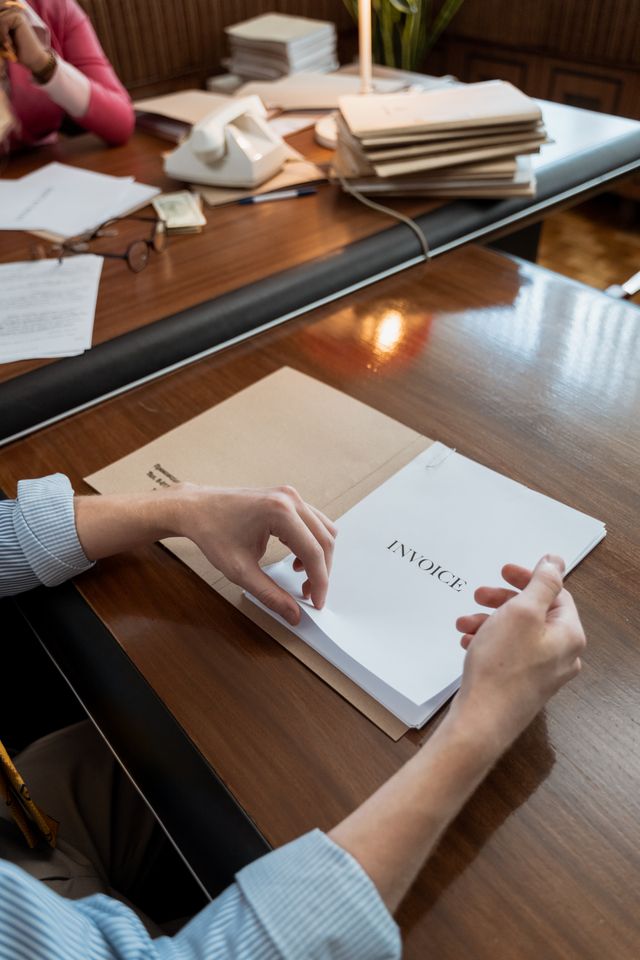
Overdue invoice emails for three different situations
Adapt three overdue invoice email templates for a first follow-up, a payment promise and an unresolved balance, with checks before you send.

The right overdue invoice message depends on what is happening, not just how many days have passed. A first reminder, an unconfirmed payment promise and an unresolved balance need different requests. Before using any template, verify the current amount, recent receipts and conversation history so the message reflects the actual account.
Check the facts before choosing a template
Confirm the invoice reference, due date, remaining balance and intended recipient. Review recent bank or accounting records through the appropriate process, and check whether the client has sent a payment reference or raised a dispute. A reminder based on yesterday’s balance can be wrong today.
Separate facts from expectations. An invoice is due under its recorded terms; a client may separately have promised to pay on a later date. Keep both dates visible. A promise is useful communication history, but it does not establish that a payment has arrived.
Use the free invoice follow-up writer to prepare a draft from verified details. DueSparrow does not read bank transactions or send collection messages for you. Review the draft and send it through your normal communication channel only after checking the underlying record.
- Current balance and currency.
- Invoice reference and original due date.
- Recent payments, credits, promises and disputes.
- Correct contact and the next action you want confirmed.
Template one: a first follow-up after the due date
Subject: Invoice [reference] — payment status
Hi [Name], I’m checking on invoice [reference], which was due on [date]. Our current records show [amount and currency] outstanding. I have attached the invoice or linked it here: [approved invoice link]. Could you confirm the expected payment date, or let me know if anything is needed to process it?
If payment has already been sent, please share the payment date and reference so we can check it against our records. Thanks, [Name].
This version makes a specific request without assuming the reason for the delay. It gives accounts payable a useful path if the invoice is missing or incomplete, and it gives the client a way to identify a payment that has not yet been matched. Replace all placeholders and check that the invoice destination is appropriate for the recipient.
The first-follow-up guide explains the supporting routine. Avoid adding threats, new fees or consequences that have not been established through the applicable agreement and your authorized process.
Template two: following up on a payment promise
Subject: Invoice [reference] — checking the agreed payment date
Hi [Name], thanks for confirming that payment of [amount and currency] was expected on [promise date]. I’m following up because we have not yet matched that payment in our current records. Could you confirm whether it has been sent? If so, the payment date and reference will help us reconcile it.
If the timing has changed, please confirm the revised expected date and any issue we need to resolve. Thanks, [Name].
Use this only after checking that the promised date has passed and that the receipt is not already recorded. If the client promised a partial amount, state that amount rather than implying the full invoice was promised. If there is an active dispute, address it through the appropriate process instead of sending an ordinary promise reminder.
The payment-promise checklist helps you record the amount, date and next review. Each new promise should update the action plan while preserving the earlier conversation history.
Template three: an unresolved balance needs a clear owner
Subject: Invoice [reference] — please confirm the next step
Hi [Name], I’m following up on the remaining balance of [amount and currency] for invoice [reference]. Our last contact was on [date], when [brief, factual summary]. Could you confirm who is handling this payment and the next action needed to resolve it?
If the invoice is blocked by a purchase order, approval or disputed item, please identify the specific issue and the person we should coordinate with. If it is ready for payment, please confirm the expected payment date. Thanks, [Name].
This is an operational escalation: it asks for ownership and the reason the balance remains open. It does not invent a legal consequence or assume bad intent. Any further commercial or legal action should follow the business’s authorized process and the facts of the case.
If the problem is a missing purchase order, use the accounts-payable blocker guide to ask the right questions rather than simply increasing the intensity of reminders.
Scroll sideways to see all columns.
| Situation | Main request | Check first |
|---|---|---|
| First overdue follow-up | Expected payment date or processing gap | Current balance and invoice delivery |
| Promise date passed | Sent status or revised date | Promised amount and recent receipts |
| Repeated unresolved balance | Responsible owner and blocker | Contact history and any dispute |
Record the reply and stop repeating stale messages
After sending, record the date, channel, factual summary and next review. When the client responds, classify the reply: payment evidence, a new promise, an administrative blocker or a dispute. Each should lead to a different next action.
If payment advice arrives, verify it before marking the balance settled. If a dispute is raised, pause routine reminders on the disputed item while the responsible person reviews it. If the message reaches the wrong contact, correct the record before trying again.
Use the friendly reminder template to keep the message structure consistent, and DueSparrow to organize the entered invoice facts and follow-up history. The value of a template is a clear starting point. Accuracy still depends on a person checking the record before each send.